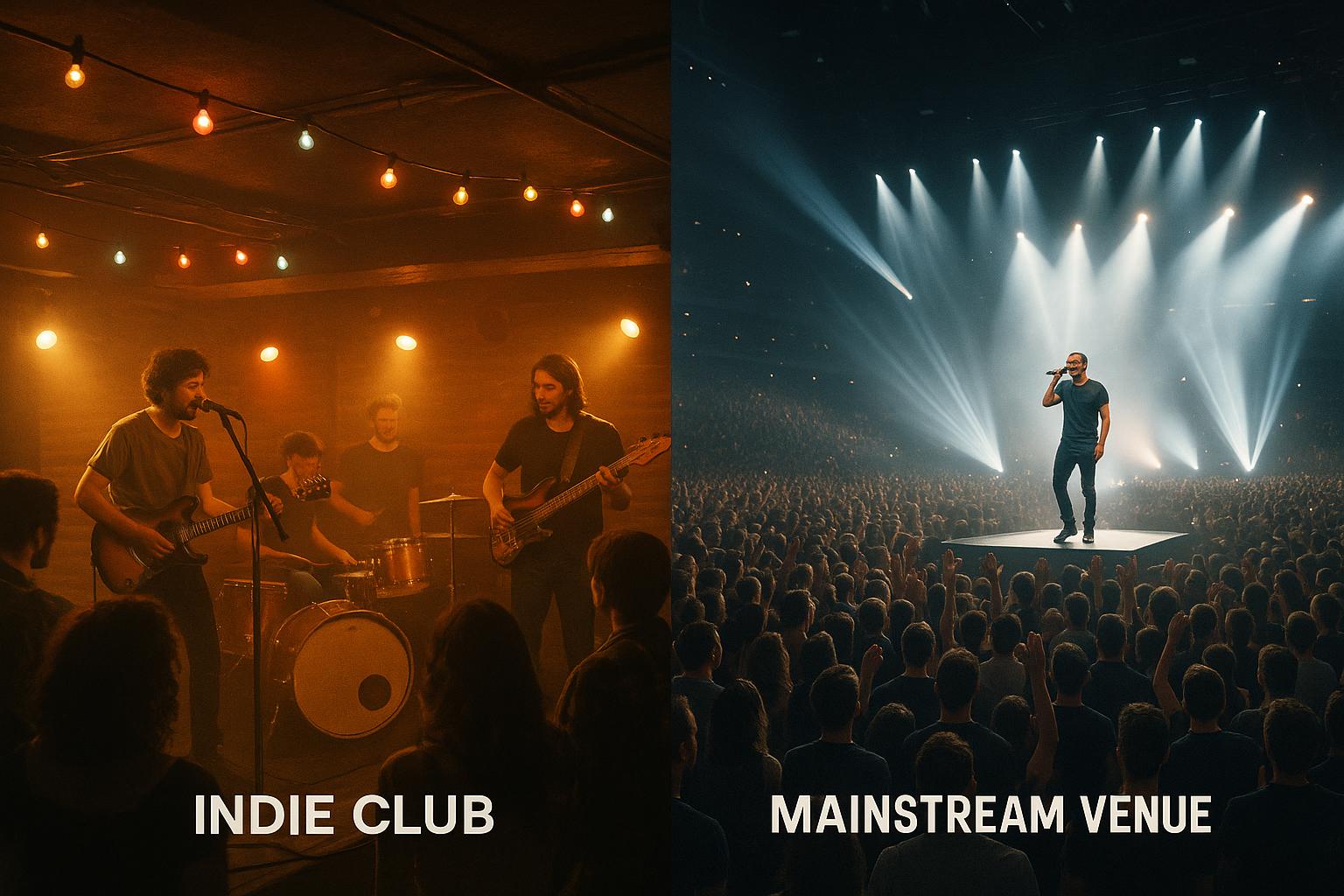
Indie Clubs vs Mainstream Venues: Key Differences
Indie clubs and mainstream venues offer distinct nightlife experiences, catering to different preferences. Indie clubs focus on alternative music, smaller spaces, and a sense of community, often at lower prices. Mainstream venues, however, are larger, polished spaces with chart-topping acts, professional production, and higher costs. Your choice depends on whether you’re after intimate vibes and emerging talent or grand productions and familiar hits.
Quick Overview:
- Indie Clubs: Small, intimate, affordable, local talent, community-driven.
- Mainstream Venues: Large, professional, higher-priced, big-name acts, crowd-focused.
Whether you prefer discovering new sounds in a cosy setting or enjoying high-energy performances in a big crowd, understanding these differences helps you choose the right venue for your night out.
What Happens at Dedicated Alternative Music Clubs?
The Indie vs Mainstream Divide
The divide between indie clubs and mainstream venues isn't just about the music or the size of the crowd - it stems from two very different ideas of what a night out should be. Indie clubs revolve around creativity, community, and providing a stage for up-and-coming talent, while mainstream venues focus on delivering big-name acts and polished experiences to draw large audiences. These contrasting approaches shape everything about your night. Let’s dive into what drives the indie club philosophy first.
The Philosophy Behind Indie Clubs
Indie clubs live and breathe a "do-it-yourself" mindset, where staying true to their artistic roots takes priority over chasing commercial success. Instead of packing their line-ups with mainstream hits, these venues create spaces where alternative music and emerging artists can thrive. The people running these clubs are often driven by a deep love for music, not just the bottom line.
This approach naturally makes indie clubs a launchpad for new and experimental talent. They’re the kind of places where you might catch an artist testing out fresh material or blending genres in ways you’ve never heard before. For musicians, it’s a chance to hone their craft and build a loyal following before they hit the big time. For the audience, it’s an opportunity to discover something new and raw.
At their core, indie clubs are about inclusivity and creative expression. They foster an atmosphere where people connect over shared musical passions, rather than status or spending power. Regulars often know the staff, the DJs interact with the crowd, and the focus is on the music and the community rather than how much you spend at the bar. This grassroots vibe touches every aspect of the experience, from the playlists to the décor, making these venues feel like a second home for music lovers.
Mainstream Venues: Commercial Focus and Scale
Mainstream venues, on the other hand, are all about scale and professionalism. These places are run like well-oiled machines, with state-of-the-art sound systems, impressive lighting rigs, and spacious layouts designed to handle big crowds. Their goal is to deliver a seamless, high-quality experience that appeals to as many people as possible.
Profitability and accessibility are at the heart of how mainstream venues operate. They book chart-topping acts and well-known performers to ensure packed dance floors and steady ticket sales. The focus is on acts with proven appeal, guaranteeing a night that draws in a large, enthusiastic audience.
While indie clubs lean into artistic expression and a sense of community, mainstream venues prioritise consistency and scale. Their appeal lies in their predictability - whether you’re a student celebrating an exam or an office worker letting loose after a long week, you know what you’re getting. Everything is delivered with professional precision, from the music to the overall vibe, creating a reliable and familiar experience that caters to a wide range of tastes.
What Defines Indie Clubs
At their core, indie clubs embody the independent spirit through intimate venues, carefully selected local music, and a strong sense of community. Together, these elements create an experience that feels personal and one-of-a-kind.
Atmosphere: Small and Personal Spaces
Step into an indie club, and the cosy, intimate vibe is immediately apparent. With limited capacity, you're never far from the DJ booth, the bar, or your friends. These spaces often reject the uniformity of corporate design, instead embracing individuality with quirky décor, eclectic furniture, and local artwork. Take Firewater Club in Glasgow, for instance. Each of its floors offers something different - from chilled-out lounges with leather sofas perfect for catching up with friends, to vibrant dance floors where the music takes centre stage.
This close-knit environment adds a personal touch to your night out. Staff often recognise regulars, DJs can read the room and adapt their sets, and the overall atmosphere feels warm and welcoming. It’s the kind of place where connections happen naturally, whether it’s with the music, the staff, or fellow club-goers.
Music Curation: Local and Emerging Artists
The music is just as defining as the space itself. Unlike mainstream venues that prioritise commercial hits, indie clubs focus on showcasing authentic talent. These venues often give the spotlight to local DJs, emerging musicians, and artists who might not yet be household names, offering them a platform to shine. This makes indie clubs a breeding ground for fresh, exciting sounds.
Many clubs actively seek out new talent from their surrounding communities, giving bedroom producers and up-and-coming bands their first big break. The result? A diverse range of genres, from post-punk and shoegaze to underground hip-hop and experimental electronic music.
Themed nights are another hallmark of indie clubs, offering deep dives into specific genres or eras. Firewater Club, for example, hosts indie anthem nights alongside events spotlighting hip-hop and R&B, creating a tailored experience for music lovers. And because indie clubs embrace creative risks, you might hear DJs testing out unreleased tracks, live bands debuting new material, or unexpected genre mashups - offering a sense of discovery you won’t find elsewhere.
Community and Audience Engagement
Indie clubs thrive on their sense of community, transforming casual visitors into loyal regulars. The relationship between the venue, performers, and audience feels more like a partnership than a transaction.
These clubs encourage active participation. DJs often take requests or chat with the crowd between sets, breaking down barriers and fostering genuine connections. For students, in particular, these spaces become more than just nightlife spots - they turn into weekly rituals where friendships form over shared musical passions, creating a home-away-from-home vibe during term time.
Even their approach to social media reflects this grassroots ethos. Posts and messages are personal and informal, whether it’s promoting events or handling table bookings, which feels far more genuine than polished campaigns from larger venues.
This strong sense of community inspires remarkable loyalty. Regulars often travel across cities for their favourite nights, promote events among friends, and champion their go-to venues online. It’s this vibrant, people-centred spirit that ensures indie clubs remain a cornerstone of the local music and nightlife scene.
What Defines Mainstream Venues
Mainstream venues are all about scale, spectacle, and reaching the widest possible audience. These places are designed to draw in large crowds, offering a polished, professional experience that prioritises commercial success and mass appeal. Every detail, from the atmosphere to the music, reflects this goal.
Atmosphere: Big, Bold, and Professional
Step into a mainstream venue, and the sheer size immediately grabs your attention. These spaces - whether they’re massive arenas, concert halls, or high-profile nightlife spots - are built to host hundreds or even thousands of people. The focus is on creating a visually stunning experience, with high-end production values and dazzling displays. But while the grandeur is impressive, the scale often means losing the intimacy and personal charm of smaller venues.
Music Selection: Familiar Faces and Chart-Toppers
When it comes to music, mainstream venues stick to the tried-and-tested. They bring in big-name acts and popular DJs, often backed by major corporate sponsors. The playlists are filled with chart hits and polished, commercially successful tracks. While this guarantees crowd-pleasing performances, it rarely leaves room for lesser-known artists or experimental sounds to shine.
Audience: A Mixed Crowd with a Shared Love for the Spectacle
The audience at mainstream venues is a melting pot of different backgrounds, age groups, and music preferences. These spaces cater to a wide range of occasions, from birthday celebrations to casual nights out or tourist visits. The experience is less about active participation and more about enjoying the show as a spectator. While the atmosphere is professional and the events are reliably well-organised, the sense of connection and community often found in smaller, independent clubs is noticeably absent.
sbb-itb-efff411
Comparison Table: Indie Clubs vs Mainstream Venues
Here’s a quick look at how indie clubs and mainstream venues differ, helping you decide which suits your vibe.
| Aspect | Indie Clubs | Mainstream Venues |
|---|---|---|
| Capacity | Smaller and more intimate, creating a close-knit, personal atmosphere. | Built for large crowds, with space to host thousands. |
| Atmosphere | Cosy and lively, often featuring multiple floors with chilled lounges and buzzing dance areas. | Sleek, high-tech spaces with professional lighting and big stages. |
| Music Focus | Spotlight on local talent and emerging artists, offering genres like indie, rock, disco, and alternative. | Focuses on big-name acts, commercial DJs, and chart-topping hits. |
| Audience | Draws a loyal crowd of music lovers, students, and regulars, adding to the familiar and energetic vibe. | Attracts a mix of tourists, casual visitors, and large groups seeking a big night out. |
| Entry Price | Budget-friendly, with student nights starting as low as £2 before 11pm. General entry fees vary by event. | Higher pricing, often ranging from £10 to £30 or more, depending on the event. |
| Drinks | Affordable, with options starting at around £3.50 for beer or spirits. | Typically more expensive, with prices ranging from £5 to £12+. |
| Booking Options | Flexible - often free table bookings arranged informally through social media. | Requires advance bookings, often with VIP packages or bottle service (usually with a minimum spend). |
| Community Feel | Strong sense of belonging, with familiar faces and friendly interactions. | More anonymous, focusing on the spectacle rather than personal connections. |
| Music Discovery | Great for uncovering new artists and unique sounds before they hit the mainstream. | Features proven crowd-pleasers with predictable line-ups. |
| Event Frequency | Hosts themed nights throughout the week - think student events and niche music sessions. | Primarily focuses on weekend or special occasion events headlined by big names. |
Indie clubs are ideal for those seeking affordable nights out with a welcoming, community-driven vibe. Picture yourself chatting with the DJ, spotting familiar faces, and discovering fresh sounds in cities like Glasgow or Dundee. These venues thrive on their relaxed charm and personal touches.
On the other hand, mainstream venues deliver a polished, high-energy experience. With cutting-edge sound systems, dazzling lights, and headline acts, they’re perfect for those who prefer grander, more theatrical nights out.
Whether you’re after the warmth and creativity of indie clubs or the spectacle and energy of mainstream venues, knowing what each offers will help you pick the perfect spot for your night out.
How to Choose the Right Venue
Matching Venues to Your Preferences
When deciding on the perfect venue for your night out, it’s all about balancing your preferences with practical considerations like music, budget, and atmosphere. Are you on the hunt for fresh sounds, emerging artists, or niche genres like post-punk, shoegaze, or experimental electronica? Indie clubs are your go-to. These venues thrive on showcasing under-the-radar music that doesn’t often make it to commercial playlists. On the other hand, if you’re after familiar chart-toppers or the energy of big-name DJs, mainstream venues will deliver that reliable, high-energy vibe.
Budget plays a key role too. Indie clubs are often easier on the wallet, with lower entry fees and reasonably priced drinks. In contrast, mainstream venues tend to charge more for entry and drinks, which can add up quickly if you’re planning a longer night out.
The vibe of a venue is just as important. If you enjoy intimate settings where you can chat with friends, connect with the DJ, and feel part of a close-knit crowd, indie clubs are ideal. Their smaller spaces and welcoming atmosphere make for a personal experience. However, if you’re craving a larger-than-life spectacle with dazzling lights, booming sound systems, and the buzz of a big crowd, mainstream venues are the way to go.
Group size might also influence your decision. Indie clubs work well for smaller groups, offering flexibility and a relaxed setting. Larger parties, however, might appreciate the structured service and spaciousness of mainstream venues. For those who enjoy midweek outings with themed nights and a laid-back vibe, indie clubs often cater to these preferences, while mainstream venues tend to focus their big events on weekends or special occasions. This is especially true in Scotland, where the indie scene thrives with its unique charm.
Glasgow and Dundee's Indie Scene
Both Glasgow and Dundee are hotspots for indie club culture, each with its own flavour and energy. These cities, with their rich musical legacies and active student populations, offer something special for music lovers seeking an alternative to the mainstream.
Glasgow’s indie scene is deeply ingrained in the city’s identity. Known for its history of influential bands and a strong grassroots music culture, the city’s indie clubs attract a mix of students, young professionals, and devoted fans. These venues prioritise authenticity over commercial appeal. Plus, Glasgow’s compact city centre makes it easy to hop between multiple venues in a single night, each offering its own distinct vibe and musical style.
Dundee, while smaller, boasts an equally vibrant indie scene. Thanks to its two universities and a strong community spirit, the city’s indie clubs feel personal and welcoming. Regulars often know each other, and the atmosphere is one of support - both for local artists and for fellow music fans.
A standout example in both cities is Firewater Club. With locations in Glasgow and Dundee, this indie favourite caters to different moods across multiple floors. In Glasgow, the venue’s central location makes it a convenient choice, while in Dundee, it’s a hub for students and music enthusiasts alike. Themed nights are a big draw, particularly Thursday student nights, where entry is just £2 before 11pm. The club’s informal approach, including table bookings via Instagram, reflects the relaxed and community-driven ethos of indie venues.
What truly sets Glasgow and Dundee apart is their commitment to music discovery. Both cities have a reputation for nurturing fresh talent, with indie clubs playing a key role in giving emerging artists a platform. Whether you’re drawn to Glasgow’s variety or Dundee’s close-knit atmosphere, these scenes offer an experience that prioritises exploration over predictability and a genuine sense of community over the anonymity of larger venues.
Conclusion
Indie clubs bring a cosy vibe, fresh talent, and budget-friendly nights that create a sense of community. On the other hand, mainstream venues deliver polished productions, big-name acts, and large-scale entertainment. Both have their charm, and the choice often depends on your mood and what you're looking for that night.
The beauty of UK nightlife is that it caters to every preference. One evening, you might find yourself soaking up the raw energy of an indie club on a student night. Another, you could be revelling in the spectacle of a big-name performance at a mainstream venue. You might even mix it up - spending midweek at indie gigs and saving weekends for the larger, more extravagant venues. There’s no right or wrong way to enjoy the scene.
Switching between indie and mainstream venues keeps your nights out fresh and exciting. You could stumble across your next favourite band in a small, intimate setting or be blown away by the production value of a massive event. Both offer something unique, enriching your overall experience. Whether you’re drawn to the grassroots charm or the grand spectacle, Scotland’s nightlife has something for everyone. It’s this variety that makes every night out unforgettable.
FAQs
What makes indie clubs a better choice than mainstream venues for a night out?
Indie clubs bring something special to the nightlife scene that larger, mainstream venues often struggle to replicate. Their charm lies in the intimate atmosphere, creating a sense of belonging where people from all backgrounds feel at home.
These spaces are also a haven for new and experimental talent, offering a stage for fresh voices and creative expression. Whether you're eager to catch the next big artist before they hit the mainstream or simply enjoy a closer connection with both the performers and the crowd, indie clubs promise a night out that's both unique and unforgettable.
How do indie clubs help emerging artists compared to mainstream venues?
Indie clubs are a lifeline for emerging artists, offering a stage where they can perform live, experiment with their music, and connect directly with local audiences. These smaller, more intimate venues focus on nurturing fresh talent, creating a space where musicians can hone their craft and start building a loyal fan base.
What sets indie clubs apart from mainstream venues is their emphasis on community and creativity. While larger venues often spotlight established acts, indie clubs champion grassroots music scenes, bringing new voices to the forefront. By doing so, they add to the cultural richness of their cities and play a vital role in the UK's music landscape, providing opportunities that might otherwise be out of reach for many budding artists.
What should I think about when choosing between an indie club and a mainstream venue?
When choosing, think about factors like the vibe, music genre, crowd, and type of event that align with what you enjoy most. Indie clubs often provide a cosy atmosphere and showcase up-and-coming artists, while mainstream venues usually draw larger audiences with big-name performers.
Ask yourself if you’re drawn to a relaxed, creative setting or a lively, polished experience. Indie clubs tend to attract a niche crowd of like-minded individuals, while mainstream venues appeal to a more diverse audience. Both have their own charm, so why not try both and see which feels right for you?